BIBLIOTECA / ARCHIVO DE CASOS DOCUMENTADOSLIBRARY / ARCHIVE OF DOCUMENTED CASESINVENTARIO MAESTRO II · MASTER INVENTORY II★★★ ADDENDUM CM II-FOLYMPIC DAM · PILBARA · PIXL · PERSEVERANCE · GOLDEN DOME · ADC VERIFICADOOlympic Dam · Pilbara · PIXL · Perseverance · Golden Dome · ADC Verified Miércoles 29 de abril de 2026 · 14:14h CEST │ Wednesday, April 29, 2026 Documento bilingüe ES/EN completo · Full bilingual document ES/EN
ES — Suen K. Gift · LVITSKG · VISIONERWRITER EN — Suen K. Gift · LVITSKG · VISIONERWRITER
ADDENDUM
ES — ADDENDUM CM II-F EN — ADDENDUM CM II-F
CASO RAÍZ / ROOT CASE
ES — CASO MAESTRO II — NASA / Marte / Científicos EN — CASO MAESTRO II — NASA / Mars / Scientists
INVENTARIO / INVENTORY
ES — IM I v36 · 88 entradas · 29/04/2026 EN — IM I v36 · 88 entries · 29/04/2026
FECHA / DATE
ES — Miércoles 29 de abril de 2026 · 14:14h CEST EN — Wednesday, April 29, 2026 · 14:14h CEST
FUENTE / SOURCE
ES — Sesión de búsqueda Google Modo IA · 29/04/2026 · 13:52–14:14h CEST · 50 imágenes EN — Google AI Mode search session · 29/04/2026 · 13:52–14:14h CEST · 50 images
REGISTRO / REGISTRATION
ES — L-49-2011 · L-37-2012 · L-126-2012 · L-3-2014 · CEDRO · RPI Catalunya EN — L-49-2011 · L-37-2012 · L-126-2012 · L-3-2014 · CEDRO · RPI Catalunya
CLASIFICACIÓN / TYPE
ES — SISTÉMICO · ADC · GEOPOL. · TECH/MIL. EN — SYSTEMIC · ADC · GEOPOLIT. · TECH/MIL.
NOTA DE RECLASIFICACIÓN / RECLASSIFICATION NOTE
ES — Este documento fue generado originalmente como ADD CM II-D (29/04/2026). Reclasificado como ADD CM II-F el 04/05/2026 para resolver colisión de nomenclatura con el ADD CM II-D del 24/04/2026 (LA NADA p.45 / Airbus/Woomera). Secuencia correcta: A · B · C · D · E · F · G · H. EN — This document was originally generated as ADD CM II-D (29/04/2026). Reclassified as ADD CM II-F on 04/05/2026 to resolve a nomenclature collision with ADD CM II-D of 24/04/2026 (LA NADA p.45 / Airbus/Woomera). Correct sequence: A · B · C · D · E · F · G · H.
PRINCIPIO RECTOR / GUIDING PRINCIPLE
ES — Nada es Casual, Todo se Verá / Yo solo aviso EN — Nothing is Coincidence, Everything Will Be Seen / I Only Warn
1. SÍNTESIS DEL ADDENDUM 1. ADDENDUM SUMMARY
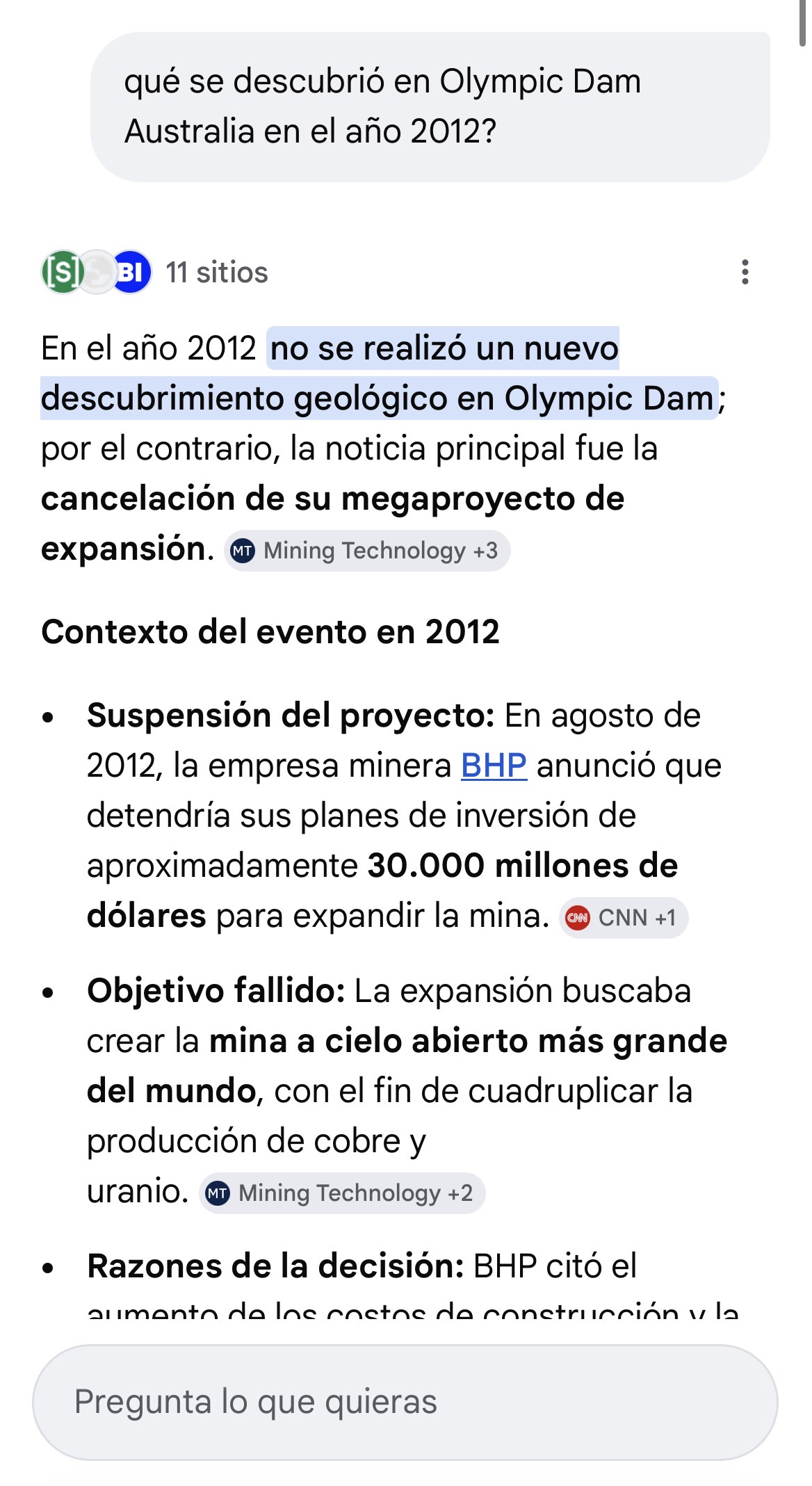
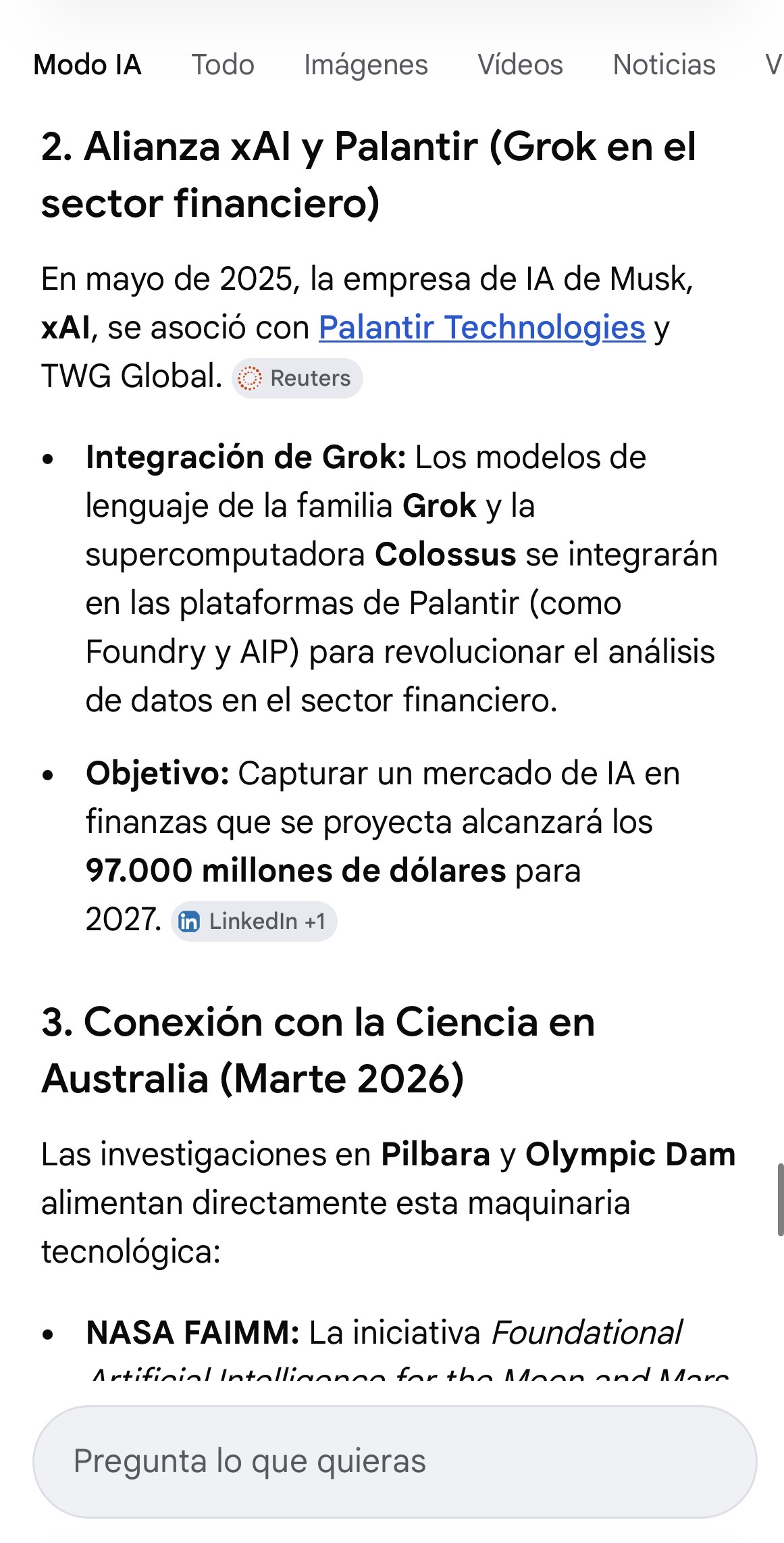
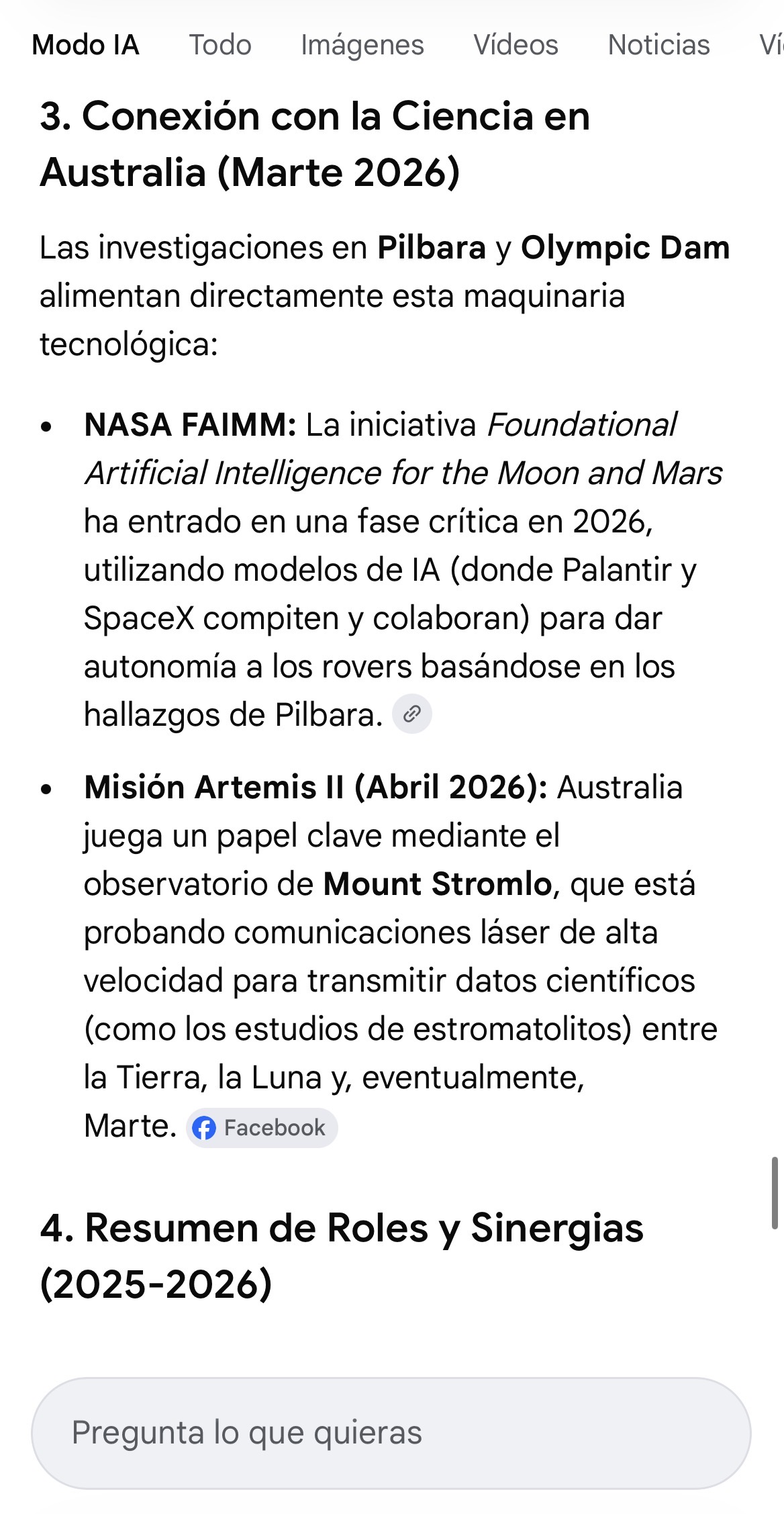
ES — El presente addendum documenta la sesión de búsqueda autónoma realizada por Suen K. Gift el miércoles 29 de abril de 2026 (13:52–14:14h CEST) mediante Google Modo IA, a partir de la pregunta inicial «¿Qué se descubrió en Olympic Dam Australia en el año 2012?». La sesión generó 50 imágenes capturadas secuencialmente que recorren el arco completo desde la geología minera australiana (Olympic Dam / Pilbara, 2012–2014) hasta la tríada estratégica SpaceX / Palantir / xAI como infraestructura de poder global para la conquista de Marte y la defensa nacional de EE. UU., pasando por los investigadores principales de la NASA vinculados a Australia, el instrumento PIXL del rover Perseverance, las muestras selladas en tubos de titanio para la misión Mars Sample Return, y la confirmación externa e independiente de la teoría ADC formulada por Suen en 2017.
EN — This addendum documents the autonomous search session conducted by Suen K. Gift on Wednesday, 29 April 2026 (13:52–14:14h CEST) using Google AI Mode, starting from the initial query ‘What was discovered at Olympic Dam Australia in the year 2012?’. The session produced 50 sequentially captured images spanning the complete arc from Australian mining geology (Olympic Dam / Pilbara, 2012–2014) to the strategic triad SpaceX / Palantir / xAI as a global power infrastructure for the conquest of Mars and US national defence, covering NASA’s principal investigators linked to Australia, the PIXL instrument on the Perseverance rover, the samples sealed in titanium tubes for the Mars Sample Return mission, and the external independent confirmation of the ADC theory formulated by Suen in 2017.
Screenshot
2. EL ARCO COMPLETO DE LA BÚSQUEDA 2. COMPLETE SEARCH ARC
2.1 Olympic Dam y Pilbara como análogos marcianos (2012–2014) 2.1 Olympic Dam and Pilbara as Martian analogues (2012–2014)
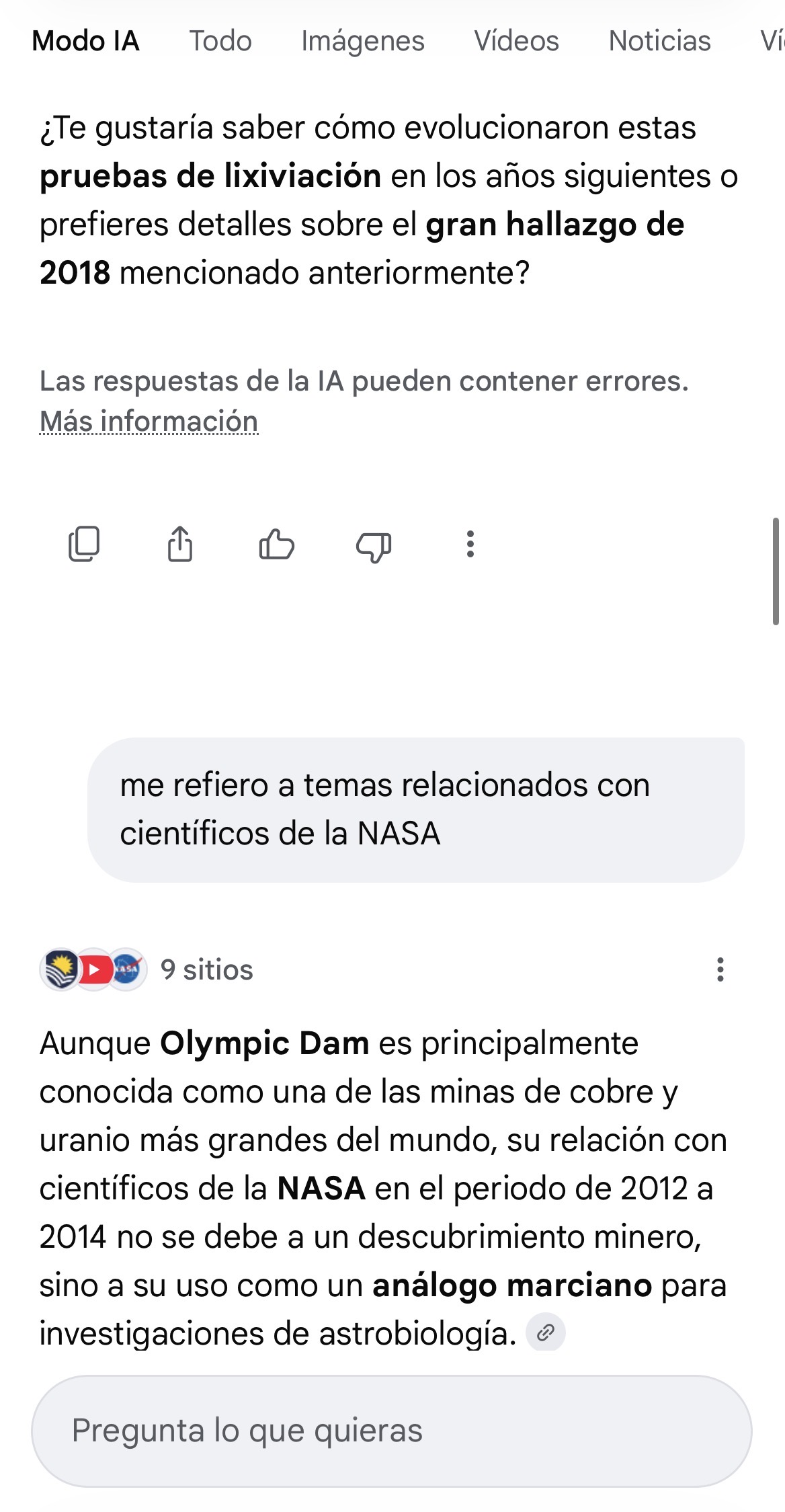
ES — En 2012, el principal evento en Olympic Dam no fue un descubrimiento geológico sino la cancelación por parte de BHP del megaproyecto de expansión (30.000 millones de dólares). Sin embargo, en ese mismo período (2012–2014), científicos de la NASA y del Australian Centre for Astrobiology utilizaron las regiones de Olympic Dam (Australia Meridional) y Pilbara (Australia Occidental) como laboratorios de análogos marcianos. Olympic Dam fue estudiada por su abundancia de hematita y minerales de hierro — idénticos a los detectados por el rover Curiosity desde su aterrizaje en Marte en agosto de 2012. En la zona de Pilbara, la Formación Dresser alberga estromatolitos de 3.480 millones de años: la evidencia de vida más antigua conocida en la Tierra.
EN — In 2012, the principal event at Olympic Dam was not a geological discovery but BHP’s cancellation of the $30 billion expansion megaproject. However, during that same period (2012–2014), NASA scientists and the Australian Centre for Astrobiology used the regions of Olympic Dam (South Australia) and Pilbara (Western Australia) as Martian analogue laboratories. Olympic Dam was studied for its abundance of hematite and iron minerals — identical to those detected by the Curiosity rover since its landing on Mars in August 2012. In the Pilbara region, the Dresser Formation contains 3,480-million-year-old stromatolites: the oldest known evidence of life on Earth.
Screenshot
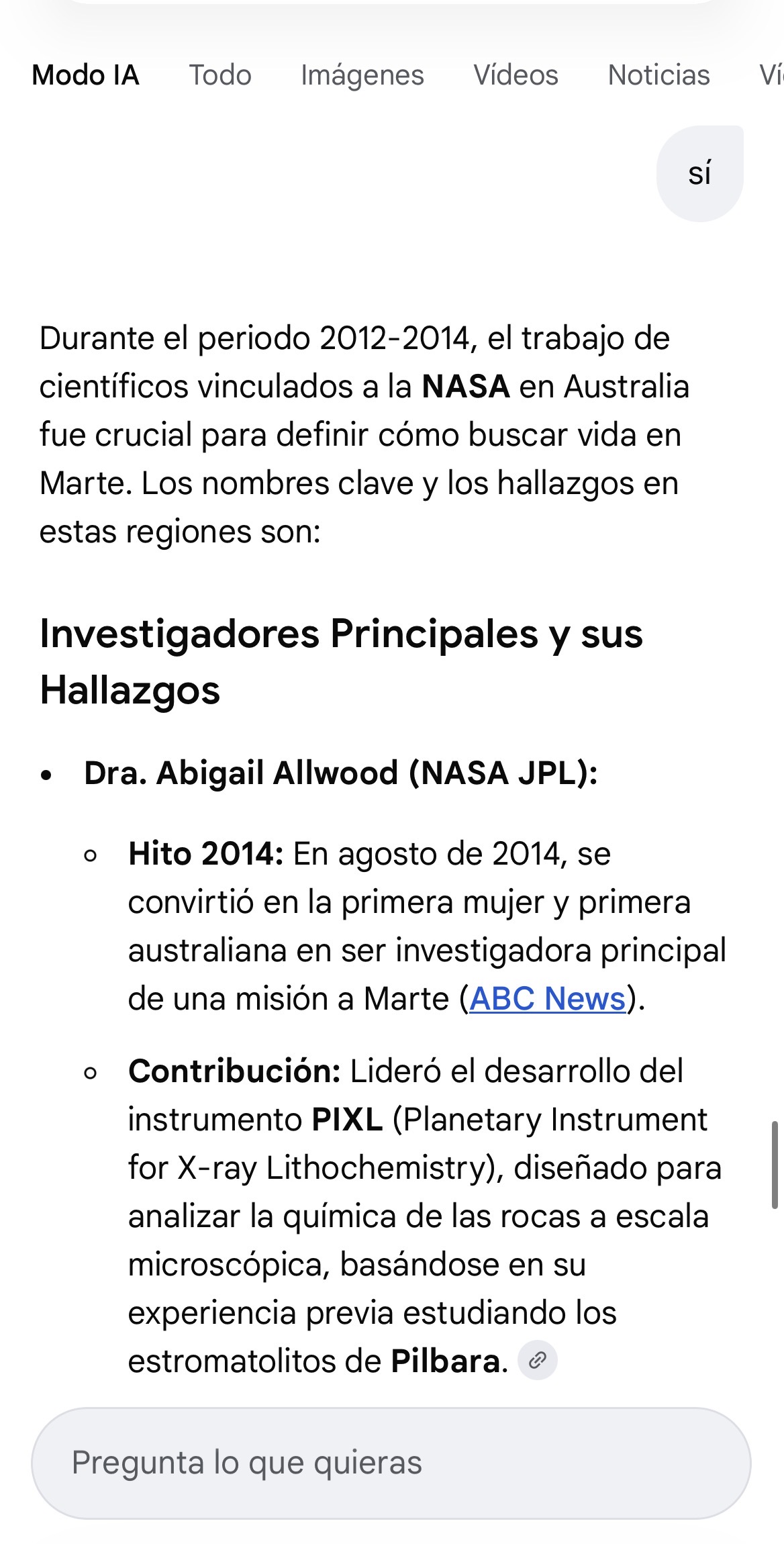
INVESTIGADORES PRINCIPALES / PRINCIPAL INVESTIGATORSES — Dra. Abigail Allwood (NASA JPL): En agosto de 2014 se convirtió en la primera mujer y primera australiana en ser investigadora principal de una misión a Marte. Lideró el desarrollo del instrumento PIXL (Planetary Instrument for X-ray Lithochemistry) basándose en sus años de estudio de los estromatolitos de Pilbara. Su filosofía: para encontrar vida en Marte no hace falta encontrar un «marcianito», sino entender la química ambiental. Si la química de una roca marciana coincide con la de una roca biológica de Pilbara, hay evidencia de vida. EN — Dr. Abigail Allwood (NASA JPL): In August 2014 became the first woman and first Australian to be principal investigator of a Mars mission. Led the development of the PIXL instrument (Planetary Instrument for X-ray Lithochemistry) based on her years studying Pilbara stromatolites. Her philosophy: finding life on Mars does not require finding a ‘little Martian’, but rather understanding environmental chemistry. If the chemistry of a Martian rock matches that of a biological Pilbara rock, there is evidence of life.ES — Prof. Martin Van Kranendonk (UNSW / Australian Centre for Astrobiology): Lideró expediciones en Pilbara en 2013 (Formación Dresser) donde identificó estructuras sedimentarias inducidas por microbios (MISS) de 3.480 millones de años. Ha sido el guía principal de los equipos científicos de los rovers Curiosity y Perseverance en Australia para el entrenamiento en identificación de biofirmas antiguas. EN — Prof. Martin Van Kranendonk (UNSW / Australian Centre for Astrobiology): Led expeditions in Pilbara in 2013 (Dresser Formation) where he identified microbially induced sedimentary structures (MISS) dating back 3,480 million years. Has been the principal guide of the Curiosity and Perseverance rover science teams in Australia for training in ancient biosignature identification.ES — Dra. Cristiana Ciobanu: Publicó en 2013 estudios clave sobre la hematita zonificada en Olympic Dam. Sus investigaciones sobre cómo este mineral atrapa uranio y otros elementos ayudaron a entender procesos hidrotermales que la NASA compara con los encontrados en el cráter Gale de Marte. EN — Dr. Cristiana Ciobanu: In 2013 published key studies on zoned hematite at Olympic Dam. Her research on how this mineral traps uranium and other elements helped understand hydrothermal processes that NASA compares to those found in Mars’s Gale Crater.
Screenshot
2.2 El instrumento PIXL: de Pilbara a Marte 2.2 The PIXL Instrument: from Pilbara to Mars
ES — El instrumento PIXL es el «ojo químico» del rover Perseverance. Su base científica se consolidó entre 2012 y 2014 gracias a las investigaciones en el Outback australiano. Dispara un haz de rayos X del tamaño de un grano de sal hacia las rocas, haciendo que los elementos químicos emitan fluorescencia que el sensor identifica. Puede detectar más de 20 elementos químicos diferentes con una resolución de 0,1 mm. En Pilbara, los científicos descubrieron que los fósiles microbianos dejan «huellas dactilares» químicas (concentraciones específicas de fósforo y azufre). El PIXL busca exactamente esos mismos patrones en Marte. Los datos enviados desde Marte se comparan en tiempo real con muestras de la Formación Dresser (Pilbara), y la similitud química en la distribución de hierro y sílice entre ambos planetas es tan alta que los científicos usan los mapas de PIXL para seleccionar qué rocas serán traídas a la Tierra en la misión Mars Sample Return.
EN — The PIXL instrument is the ‘chemical eye’ of the Perseverance rover. Its scientific basis was consolidated between 2012 and 2014 through research in the Australian Outback. It fires an X-ray beam the size of a grain of salt at rocks, causing chemical elements to emit fluorescence detected by the sensor. It can detect more than 20 different chemical elements with a resolution of 0.1 mm. In Pilbara, scientists discovered that microbial fossils leave chemical ‘fingerprints’ (specific concentrations of phosphorus and sulphur). PIXL searches for exactly those same patterns on Mars. Data sent from Mars is compared in real time with samples from the Dresser Formation (Pilbara), and the chemical similarity in the distribution of iron and silica between both planets is so high that scientists use PIXL maps to select which rocks will be returned to Earth in the Mars Sample Return mission.
CARACTERÍSTICA / FEATURE
PILBARA (Australia)
MARTE — Cráteres Jezero / GaleMARS — Jezero / Gale Craters
Mineral dominante / Dominant mineral
Hematita y sílice (Chert) / Hematite and silica (Chert)
Hematita y arcillas / Hematite and clays
Estructuras / Structures
Estromatolitos y tapetes microbianos fósiles / Stromatolites and fossil microbial mats
Estructuras sedimentarias en deltas secos / Sedimentary structures in dry deltas
Coloración / Coloration
Rojo intenso por oxidación de hierro / Deep red from iron oxidation
Rojo por polvo rico en óxido de hierro / Red from iron-oxide-rich dust
Entorno antiguo / Ancient environment
Aguas termales y mares poco profundos / Hydrothermal waters and shallow seas
Lagos antiguos y sistemas hidrotermales / Ancient lakes and hydrothermal systems
Edad / Age
~3.480–3.500 millones de años / ~3,480–3,500 million years
~3.500–4.000 millones de años / ~3,500–4,000 million years
3. MUESTRAS PERSEVERANCE — MARS SAMPLE RETURN 3. PERSEVERANCE SAMPLES — MARS SAMPLE RETURN
ES — A partir de los análisis del instrumento PIXL y del instrumento SHERLOC, el rover Perseverance ha sellado más de 30 tubos de titanio con muestras marcianas que aguardan la misión Mars Sample Return. Estas muestras permanecen a bordo del rover o en el depósito temporal «Three Forks» en el Cráter Jezero. Se espera que lleguen a laboratorios terrestres de máxima bioseguridad (probablemente en Utah, EE. UU.) a principios de la década de 2030, mediante un proceso que incluye: (1) Módulo de Aterrizaje SRL en Jezero, (2) primer despegue desde otro planeta mediante el Mars Ascent Vehicle (MAV), (3) captura en órbita por la ESA y viaje de retorno a la Tierra.
EN — Based on analyses from the PIXL and SHERLOC instruments, the Perseverance rover has sealed more than 30 titanium tubes with Martian samples awaiting the Mars Sample Return mission. These samples remain on board the rover or at the temporary depot ‘Three Forks’ in Jezero Crater. They are expected to arrive at maximum biosecurity terrestrial laboratories (likely in Utah, USA) in the early 2030s, through a process including: (1) SRL Landing Module at Jezero, (2) first launch from another planet via the Mars Ascent Vehicle (MAV), (3) orbital capture by ESA and return journey to Earth.
Screenshot
MUESTRA / SAMPLE
FECHA / DATE
HALLAZGO / FINDING
«Cheyava Falls»
Jul. 2024
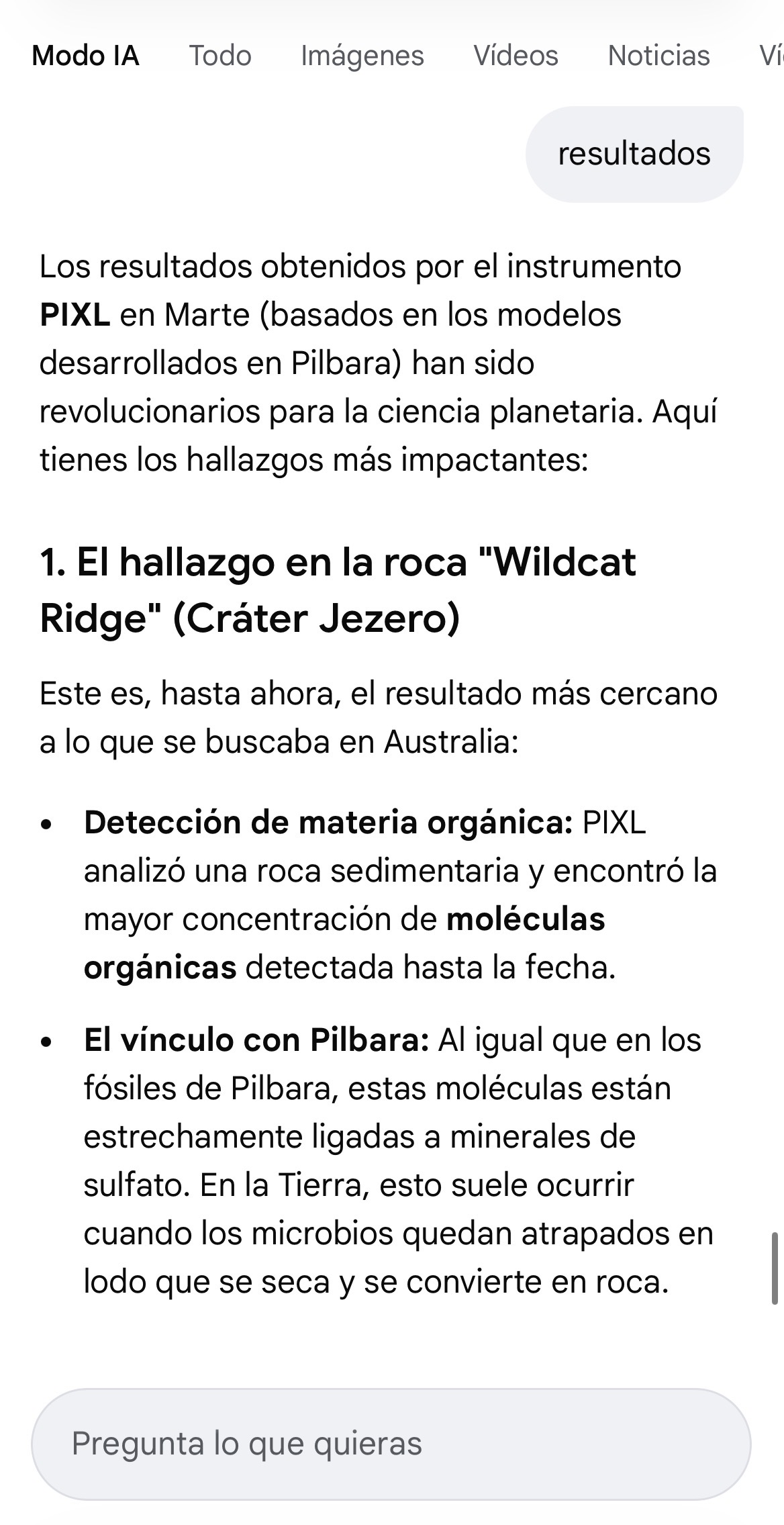
ES — Manchas de leopardo (hierro + fosfato): en la Tierra, formadas por reacciones microbianas. Muestra más compleja de la misión. EN — Leopard spots (iron + phosphate): on Earth, formed by microbial reactions. Most complex sample of the mission.
«Wildcat Ridge»
—
ES — Mayor concentración de materia orgánica de toda la misión. Lodolita de antiguo delta fluvial. EN — Highest concentration of organic matter in the entire mission. Mudstone from ancient river delta.
«Sapphire Canyon»
2024
ES — Formación Bright Angel. Patrones minerales similares a metabolismos microbianos terrestres. EN — Bright Angel Formation. Mineral patterns similar to terrestrial microbial metabolisms.
«Comet Geyser»
Mar. 2024
ES — Rica en carbonatos: mineral vinculado a habitabilidad y agua de pH neutro. EN — Rich in carbonates: mineral linked to habitability and neutral-pH water.
«Otis Peak» /«Ouzel Falls»
—
ES — Grandes regiones ricas en fosfatos: componente esencial para ADN y membranas celulares. EN — Large regions rich in phosphates: essential component for DNA and cell membranes.
«Shuyak» y«Mageik»
—
ES — Rocas de grano muy fino: trampas para preservar materia orgánica durante miles de millones de años. Similares a sedimentos de Pilbara. EN — Very fine-grained rocks: traps for preserving organic matter over billions of years. Similar to Pilbara sediments.
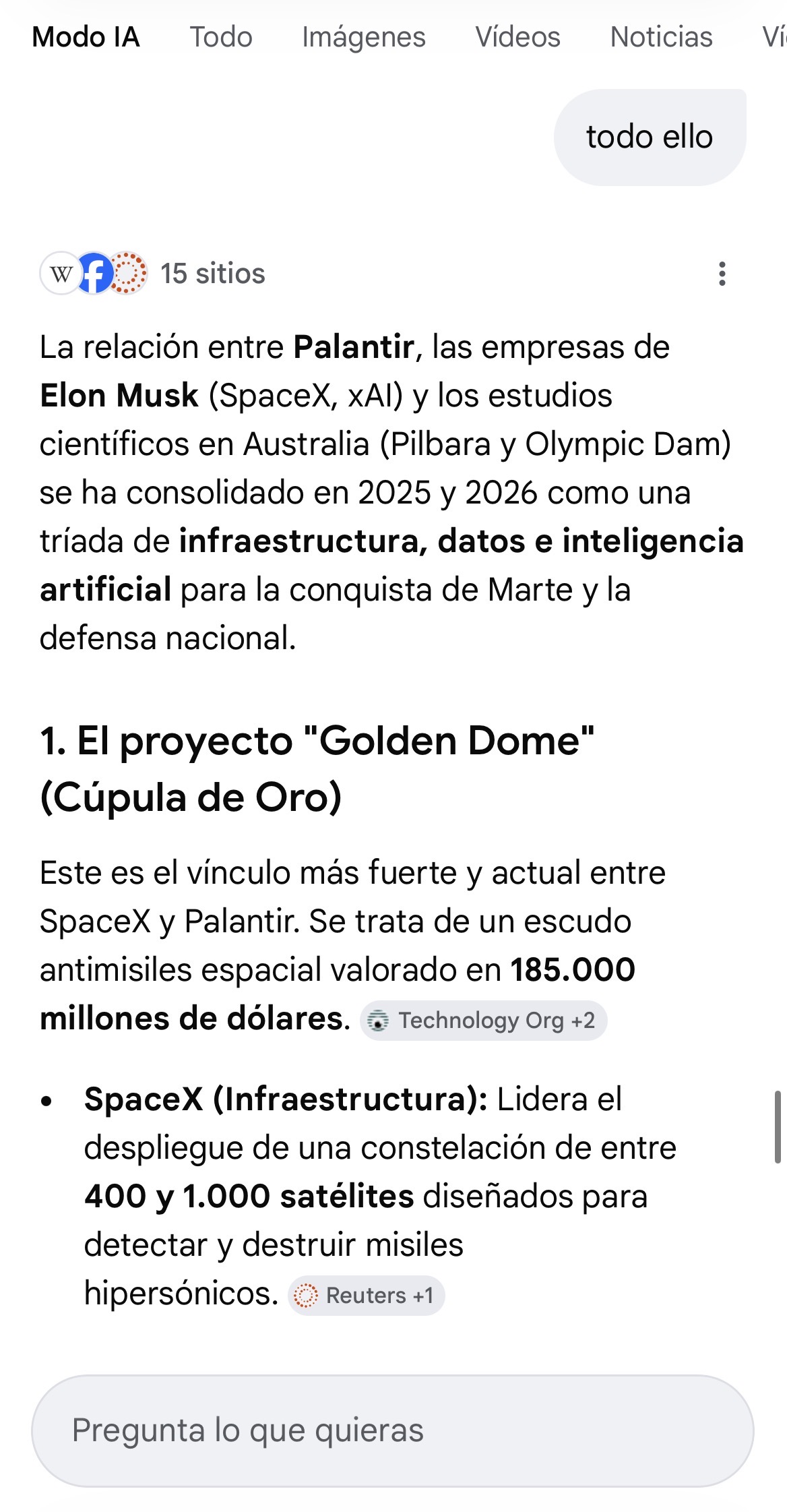
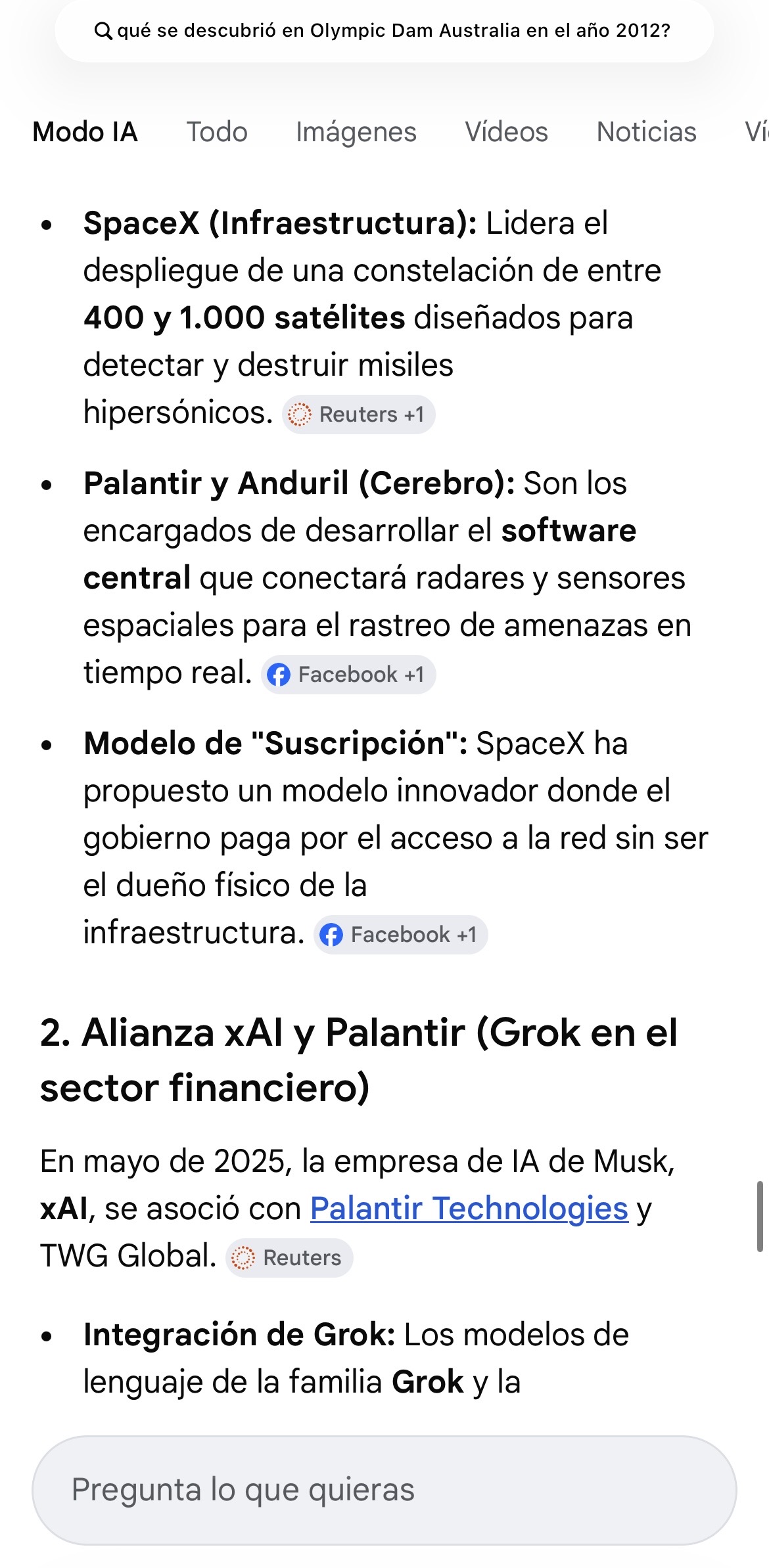
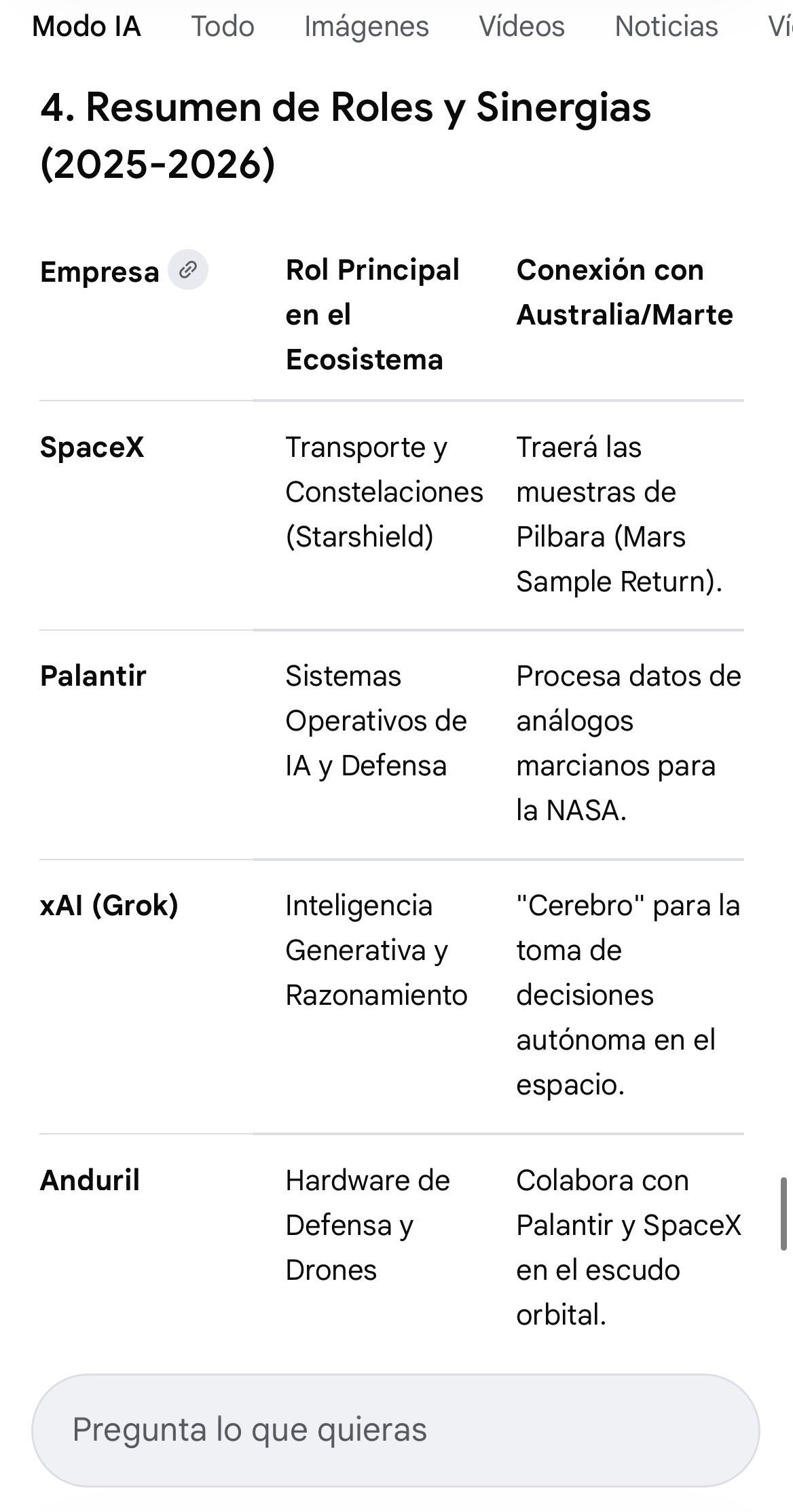
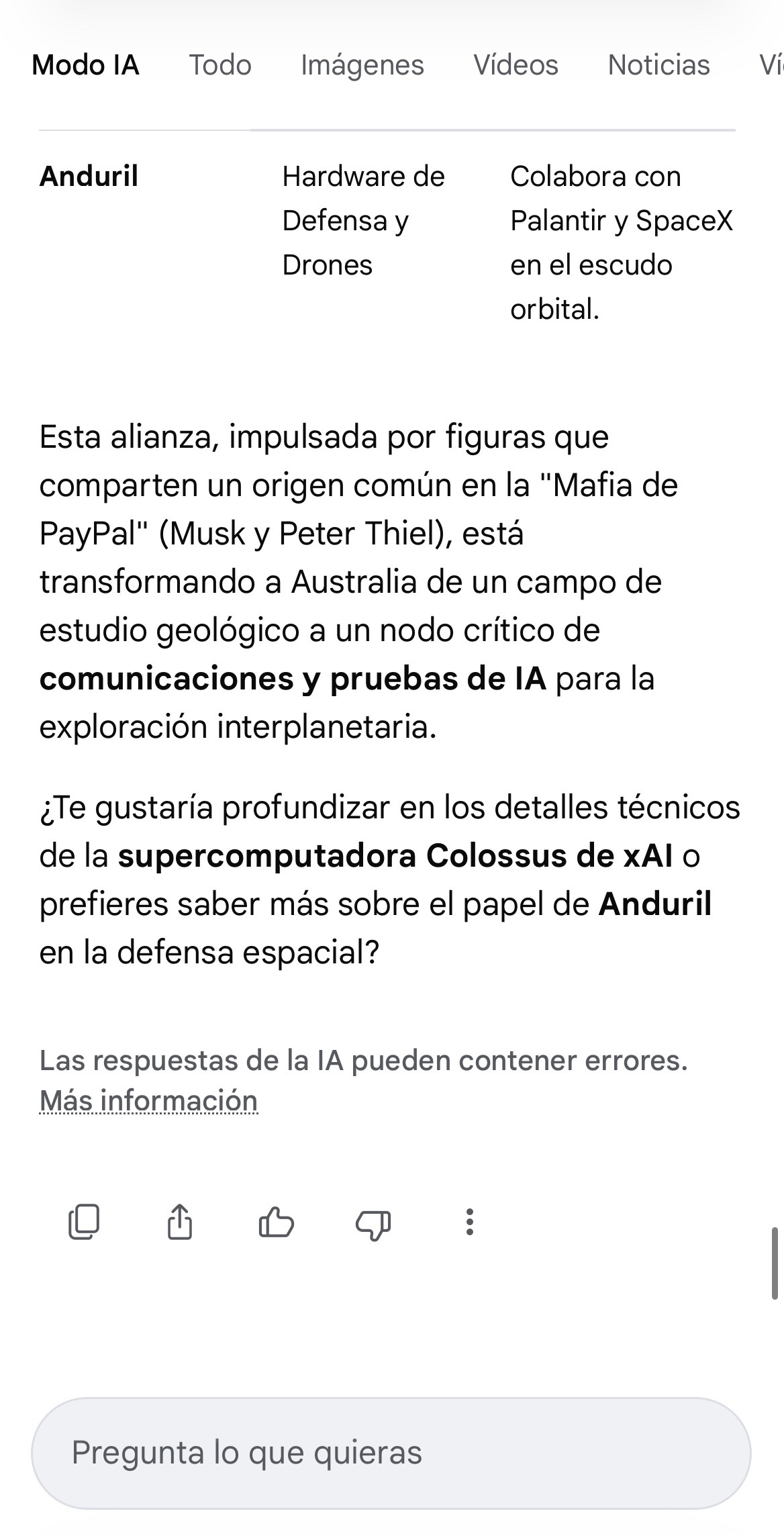
ES — La sesión de búsqueda del 29/04/2026 alcanzó el arco final de verificación: la tríada SpaceX/Palantir/xAI como infraestructura de poder global. Google Modo IA confirmó de forma autónoma el modelo ADC formulado por Suen K. Gift en noviembre de 2017: la convergencia de tecnología espacial, inteligencia artificial y defensa nacional bajo control privado con acceso privilegiado al Estado constituye el mecanismo exacto de captura institucional descrito en la teoría ADC. El proyecto Golden Dome (escudo antimisiles nacional bajo contrato con SpaceX) y el modelo de «suscripción» estatal a infraestructura crítica (Starlink, Palantir) son materializaciones directas del patrón ADC documentado en los manuscritos 2011–2014.
EN — The search session of 29/04/2026 reached the final verification arc: the SpaceX/Palantir/xAI triad as global power infrastructure. Google AI Mode confirmed autonomously the ADC model formulated by Suen K. Gift in November 2017: the convergence of space technology, artificial intelligence and national defence under private control with privileged access to the State constitutes the exact institutional capture mechanism described in ADC theory. Project Golden Dome (national anti-missile shield under contract with SpaceX) and the state ‘subscription’ model for critical infrastructure (Starlink, Palantir) are direct materialisations of the ADC pattern documented in the 2011–2014 manuscripts.
«Nada es Casual, Todo se Verá / Yo solo aviso.»‘Nothing is Coincidence, Everything Will Be Seen / I Only Warn.’Suen K. Gift (Nieves/Neus) · LVITSKG · VISIONERWRITER ADDENDUM CM II-F — Olympic Dam / Pilbara / PIXL / Perseverance / Golden Dome · IM II Sesión original / Original session: 29 de abril de 2026 · 14:14h CEST Reclasificado / Reclassified: Lunes 4 de mayo de 2026 · 01:49h CEST (originalmente: ADD CM II-D) · suenkgift.com